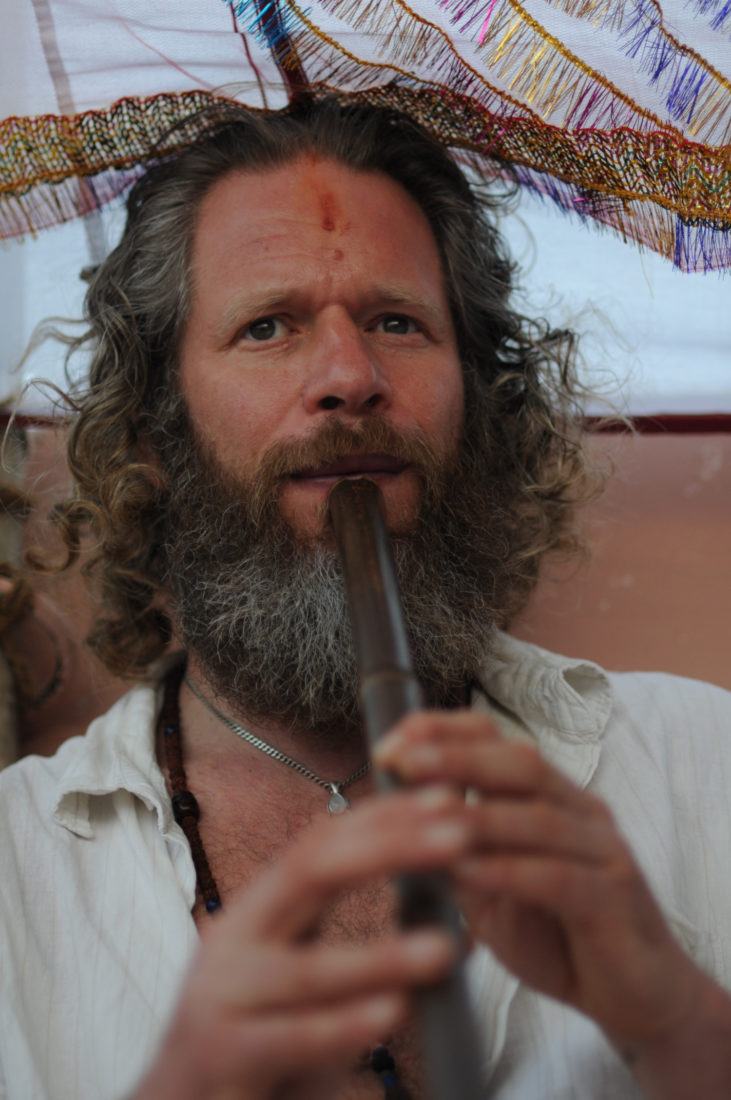
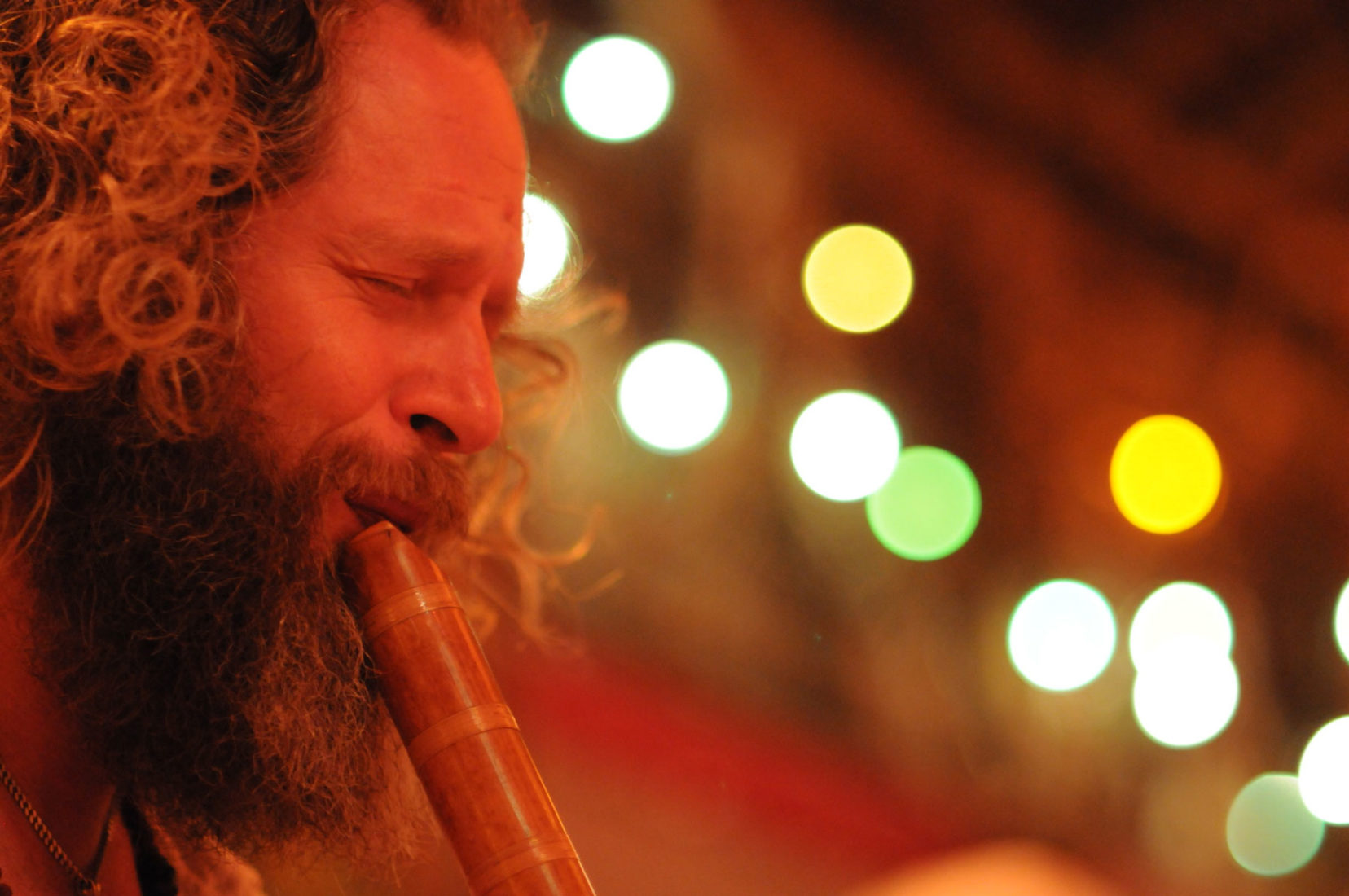
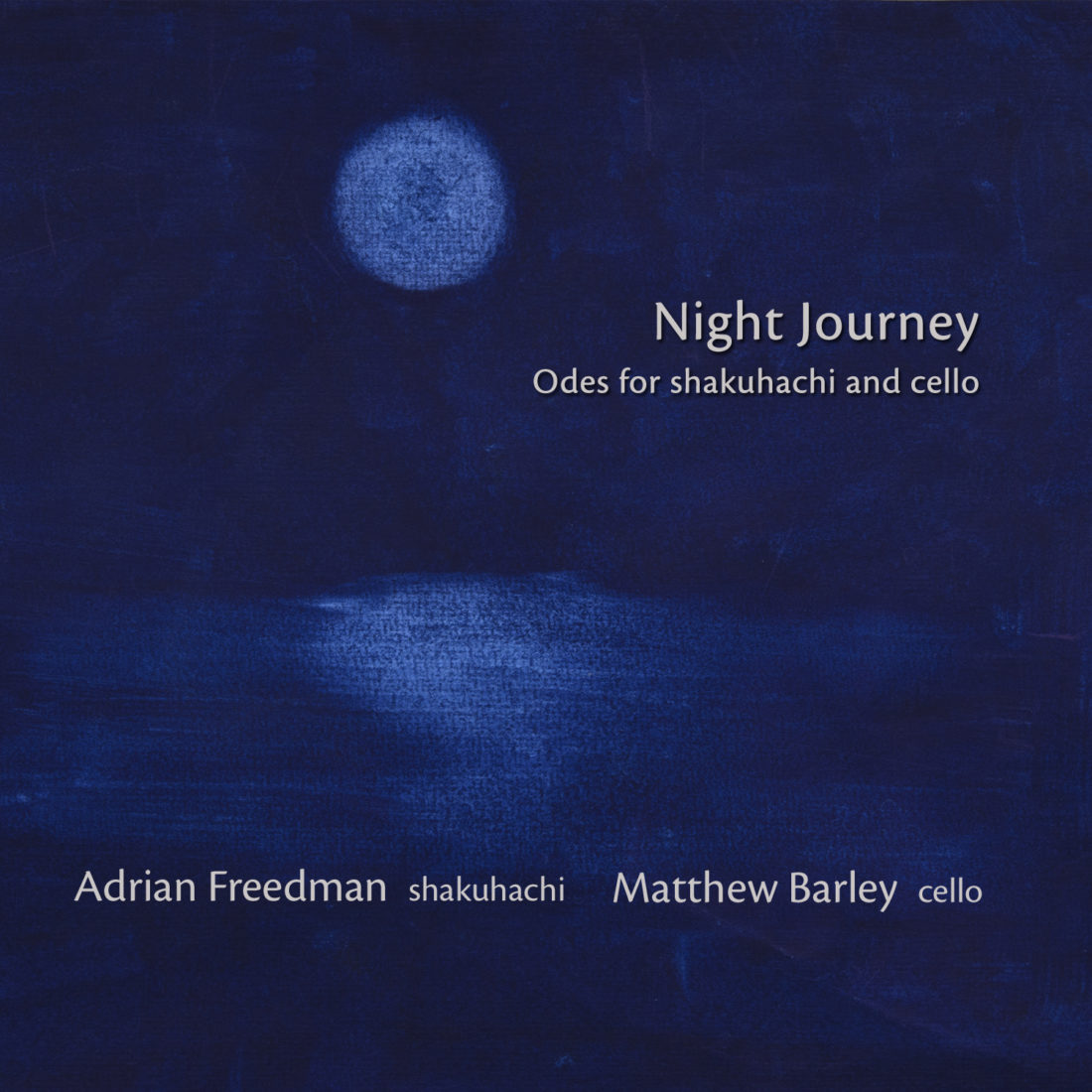
The sound of the shakuhachi comes from the edge of silence, crossing boundaries of time and culture to echo in the soul.

The shakuhachi is a traditional flute from Japan with a history stretching back over a thousand years.
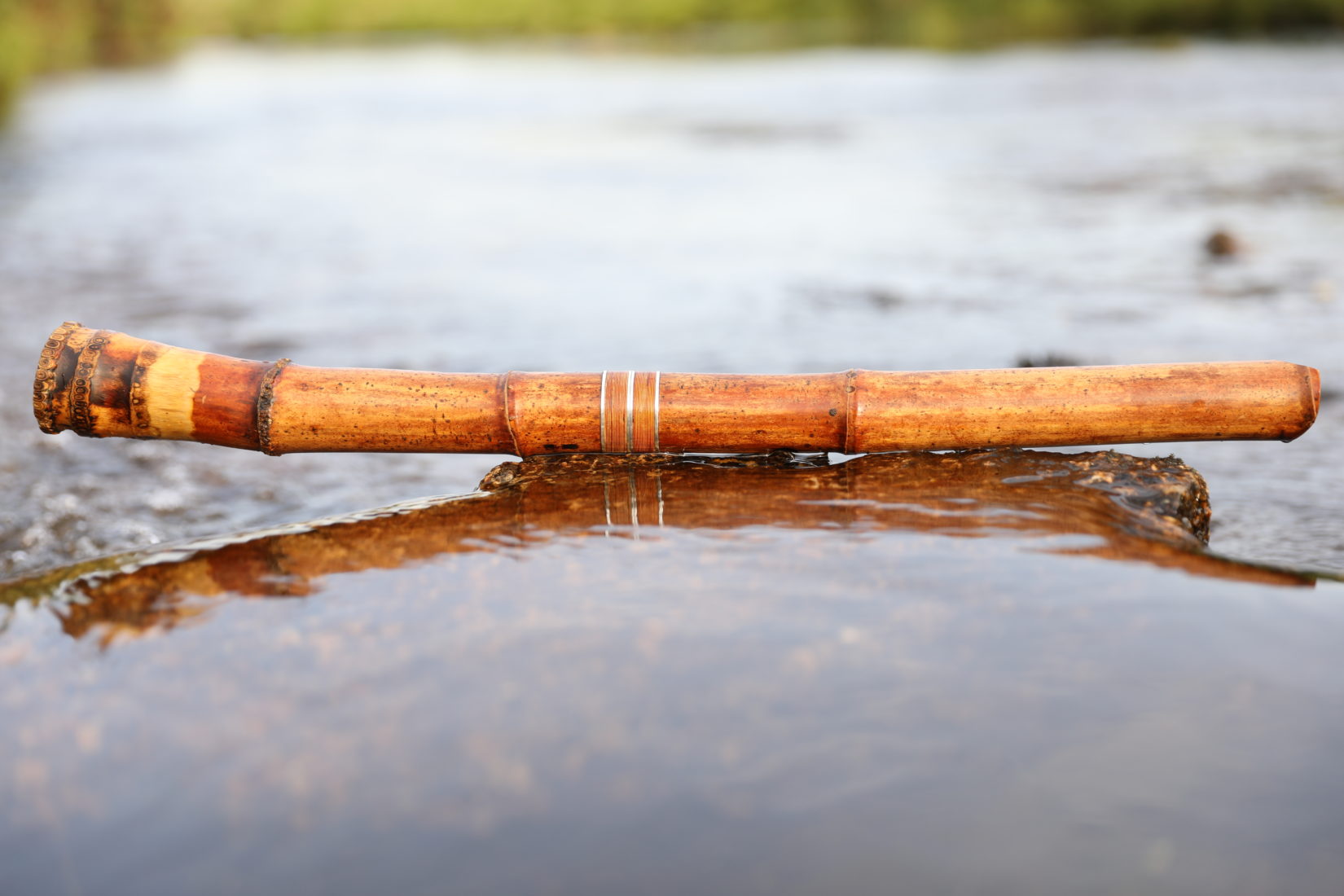
When looked at, nothing could seem more simple: a hollowed out bamboo stalk with just five holes; yet despite its simple appearance it has a reputation as being one of the most difficult instruments to master, and is capable of producing a remarkably beautiful range of expressive tones.
The Komusô

Associated with a spiritual practice known as suizen (blowing zen), the shakuhachi evolved as a meditation aid for the Komusô - Japanese Zen monks of “emptiness and nothingness”.
The Komusô were itinerant monks of the Fuke school of Zen Buddhism. They were characterized by the wearing of a reed hat which obscured their face, symbolising detachment. They roamed the Japanese countryside, collecting alms and playing the shakuhachi, at times as a prayer for safe delivery outside a house where a child was being born, or for the safe passage of souls outside a house where someone had recently passed away.

The traditional repertoire of the Komusô is called Honkyoku. Some Honkyoku pieces are serenely meditative and picturesque. Others are more powerful and dynamic. All of the music is extremely expressive.
Within the sound of the shakuhachi we can hear living nature – the autumn wind playing with dry leaves in a bamboo grove…. the cry of a soaring bird… waves crashing on a distant shore… an empty bell ringing in a still morning – and all expressed with great depth and nuance of feeling.
Like all Zen monks, the Komusô strived for enlightenment. In terms of playing the shakuhachi, it was considered that development of kisoku (spirit breath) would lead to tettei-on (absolute sound) in which a single tone could contain the entire universe.

In the words of Watazumi Doso Roshi, one of the greatest shakuhachi Zen masters;
“If you go deep into the source of where the music is being made, you’ll find something more interesting. At the source, everyone’s individual music is made. If you ask what the deep place is, it’s your own life and it’s knowing your own life.”
The Komusô monks felt it was not only the person playing the flute that could obtain enlightenment, but also those who listened to the sound of the shakuhachi.
The Komusô repertoire of Honkyoku are still taught today, passed on in an unbroken transmission from teacher to student.
Encountering Clive Bell

I first heard the shakuhachi played live in 1987, when I heard Clive Bell at the London Musicians Collective, a centre for improvised and experimental music. Clive conjured up a bewitching array of magical flutterings and penetrating tones unlike anything I’d ever heard before. He had studied in Tokyo for two years and was at that time one of the very few Western exponents of the shakuhachi. I asked him if he would teach me, and so began my personal odyssey with this instrument.
I purchased my first shakuhachi from Dan Mayers, president of the International Shakuhachi Society who happened to live close by in Kent.
After studying for a while in London with Clive I began to meet other musicians with an interest in Japanese music, and to take part in recitals.

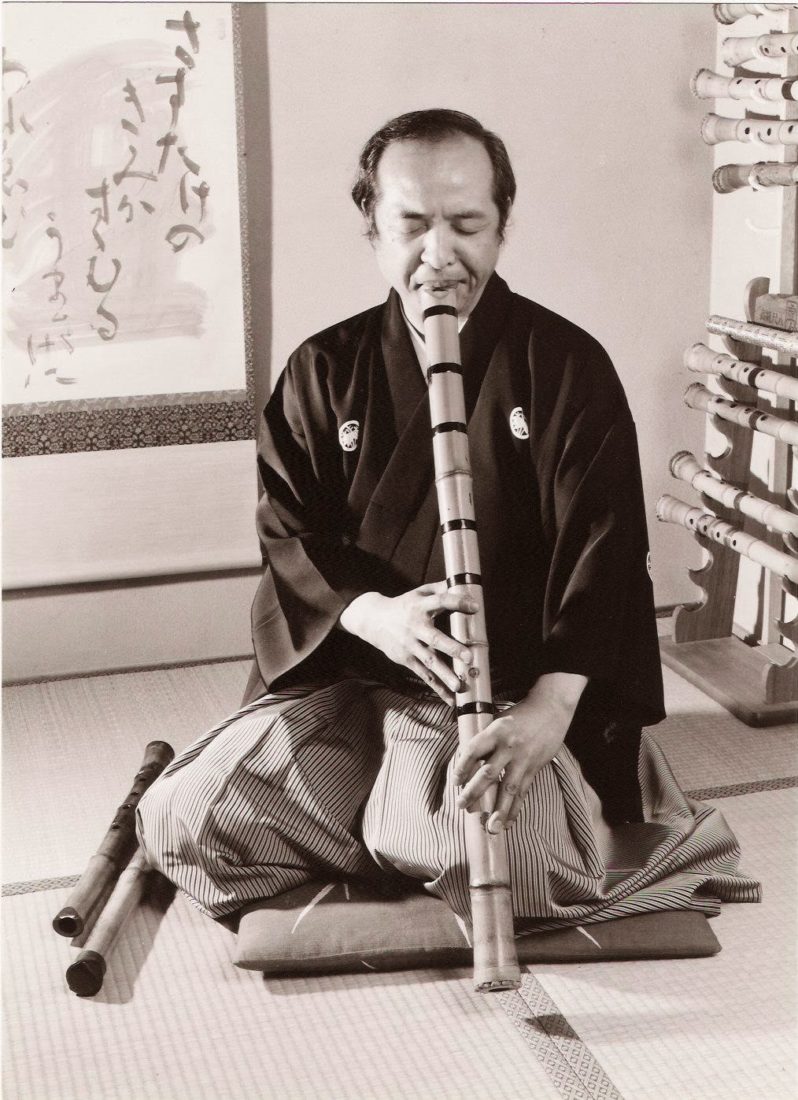
There came a turning point when I heard a recording of the celebrated Japanese master Yokoyama Katsuya and I was electrified by his playing.
Although clearly coming from another time and space, the music seemed intimately familiar and echoed in my heart like a call from some unknown universal depths of knowing and longing. I knew I had to go to Japan and study the Honkyoku with Yokoyama Sensei.
Yokoyama Katsuya

I was given the address of Yokoyama by the International Shakuhachi Society, and I wrote a letter to him which a friend translated into Japanese. It was not long before I received a reply, and Yokoyama invited me to go to Japan and study with him.
A few months later I was living in a little wooden house next to the Zen temple of Ginkakuji (Silver Pavilion) in Kyoto, the ancient capital of Japan.

I began to practice the shakuhachi for several hours a day, and to learn all I could from Yokoyama.
He did not speak any English, and my Japanese was minimal, but he was able to communicate directly and powerfully through his music. Those were special and rare times I spent with him.
Yokoyama passed away in April 2010, but I still feel the presence of his spirit each time I pick up my bamboo flute.
I lived in Japan for seven years. While there I received a scholarship from the Japanese government to attend Kyoto Arts University as a Research Fellow, and to compose new music for the shakuhachi.

Since then I have taken my music around the world and collaborated with jazz musicians, Celtic musicians, traditional musicians from India, Turkey and Brazil and other countries. I have played on film soundtracks, and used the shakuhachi in my work as a musical director for theatre companies, as well as incorporating it into numerous education projects for schools and colleges.

But still I come back each day to the pure essence of breath …..the deep, unfathomable vibration of this simple bamboo stalk that continues to awaken a universal echo in my heart….
Listen
Watch
View an 8 minute art-film featuring shakuhachi music by Adrian Freedman
Rain is Heaven on Earth.
The paper umbrella makers of Gifu.
Film by Christopher Fryman, Music Adrian Freedman.